The theragun mini 2 for pregnant women with pelvic girdle pain is one of the most-asked-about recovery tools of 2026, and for good reason: pelvic girdle pain (PGP) affects up to 1 in 5 pregnancies, and the Mini 2's small footprint, quieter QX35 motor, and three lower-intensity speeds (1750/2100/2400 PPM) make it one of the few percussion devices a prenatal physiotherapist will actually consider clearing for at-home use. Used correctly—on the glutes, outer hips, lower back paraspinals, and upper thighs, never on the abdomen, lower back midline, or directly over the pubic symphysis—it can reduce the muscular guarding that fuels PGP without aggravating ligamentous laxity. Always clear any device with your OB or pelvic-floor PT first, but if you've been given the green light, the Mini 2 is a reasonable choice. Below we cover safe technique, the trigger points that actually help PGP, and four heat/cold-equipped alternatives worth considering if the Mini 2 is out of stock or out of budget.
Why Pelvic Girdle Pain Responds to Gentle Percussion
Top Picks
Comparison: Theragun Mini 2 vs. Prenatal-Appropriate Alternatives
| Model | Lowest Speed | Heat / Cold | Weight | Best For PGP Use Case |
|---|---|---|---|---|
| Theragun Mini 2 | 1750 PPM | Neither | ~1.5 lb | Travel, side-lying glute medius work |
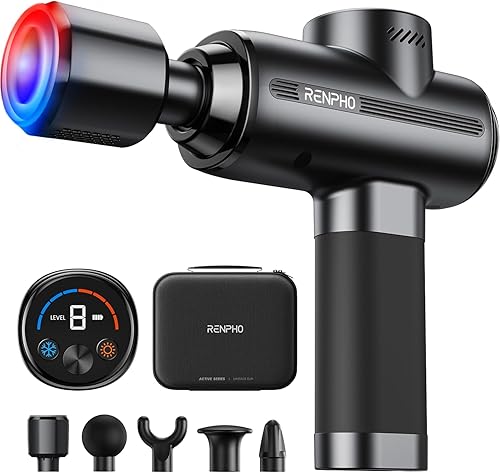
| RENPHO Active Thermacool 2 | 1800 PPM | Both (heat head + cold head) | ~1.9 lb | Alternating heat on QL, cold on SI joint |
| AERLANG Heat Massage Gun | ~1600 PPM | Heat only | ~2.1 lb | Warming tight glute max and lower back paraspinals |
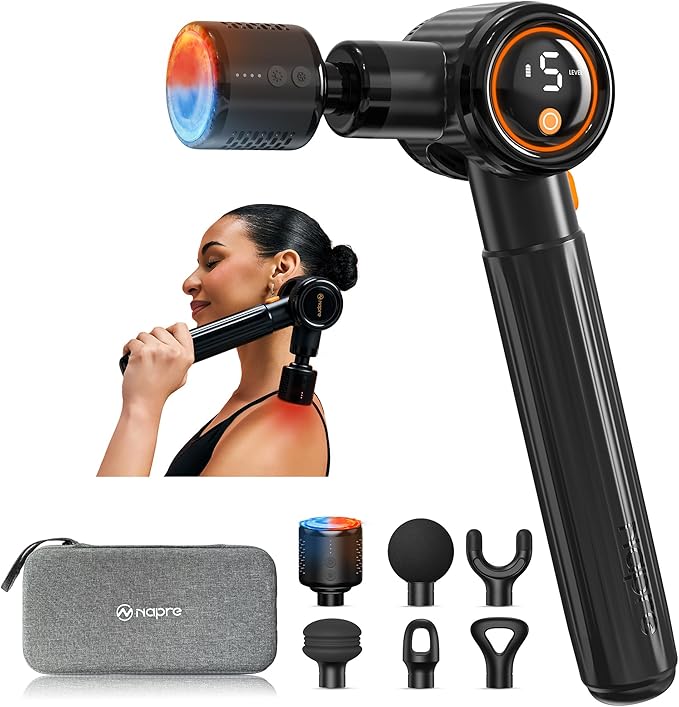
| NAPRE Heat and Cold | ~1800 PPM | Both | ~1.8 lb | Budget heat/cold combo for nightly use |
| TOLOCO Deep Tissue | 1800 PPM | Neither | ~2.2 lb | Postpartum recovery (not recommended during pregnancy without PT clearance) |
Pelvic girdle pain in pregnancy is rarely a "joint" problem in isolation. The sacroiliac joints, pubic symphysis, and surrounding ligaments loosen under relaxin, and the muscles around them—glute medius, piriformis, quadratus lumborum, hip adductors, and the deep lateral rotators—overwork to compensate. That muscular overuse creates trigger points that refer pain into the front of the pelvis, the inner thigh, and the lower back. Percussion therapy at low amplitude and low intensity helps by interrupting the nociceptive signal from those overactive muscles and improving local blood flow, without forcing the loosened joints into more motion.
When shopping for theragun mini 2 for pregnant women with pelvic girdle pain, it pays to compare specs, capacity, and real-world runtime before committing.
![RENPHO Active Thermacool 2 Massage Gun with Heat and Cold, Fathers Day Dad Gifts [2026 Upgraded] Handheld Percussion Deep Tissue Neck Back Muscle Massager, FSA Approved Gift for Me](https://massagegearlab.com/aimg/images/I/61mtD8h+HyL._AC_SX679_.jpg)
This is why a compact device like the theragun mini 2 for pregnant women with pelvic girdle pain works better than a full-size, high-stall-force gun. You want light pressure, short dwell times (15–30 seconds per spot), and the ability to reach the side-lying or hands-and-knees positions that pregnant bodies need to assume. A 1.5-pound device you can hold one-handed against your outer hip while propped on a pregnancy pillow beats a 2.5-pound brick every time.
Theragun Mini 2: What Makes It Prenatal-Friendly in 2026
Therabody updated the Mini line in late 2024, and the Mini 2 carries forward the features that matter most for pregnancy: 10 mm amplitude (deep enough to reach muscle, shallow enough to feel controlled), three preset speeds with the lowest at 1750 percussions per minute, a soft-touch standard ball plus a dampener attachment, and approximately 150 minutes of battery on a USB-C charge. The triangular grip lets you angle into the upper glutes and piriformis without twisting your wrist—important when your center of gravity is already off.
Critically, the Mini 2 is quiet enough (under 60 dB on speed 1) to use during a nap-time window without waking a toddler or partner. For many pregnant users that is the difference between using the device daily and letting it gather dust.
That said, the Theragun Mini 2 has no heat or cold function, costs around $199, and the small head can feel too pinpointed on broad areas like the QL. If those are dealbreakers, the alternatives below cover the gap. For a deeper comparison of recovery modalities, see our guide on heat versus cold therapy during pregnancy.
Heat and Cold Alternatives Worth Considering
One thing the Theragun Mini 2 cannot do is deliver temperature therapy. For pelvic girdle pain, the combination of warming the surrounding glute and QL musculature before percussion—then cooling the SI joint area afterward—is often more effective than percussion alone. Three devices in 2026 do this well at price points well below the Mini 2.
RENPHO Active Thermacool 2 Massage Gun with Heat and Cold
This is the alternative we most often recommend when a pregnant user wants heat plus cold in one device. The Thermacool 2 ships with a dedicated heated head that reaches a controlled 113°F (warm, not scalding) and a separate cold head that drops to roughly 41°F—perfect for the inflamed SI joint area after a long day on your feet. At its lowest speed it runs around 1800 PPM, gentle enough for prenatal use on the outer hip and upper glute. The grip is rubberized and angled, which matters when you're reaching around a growing belly. Battery life is roughly six hours on standard percussion and about two hours when running heat or cold. RENPHO Active Thermacool 2 Massage Gun with Heat and Cold.
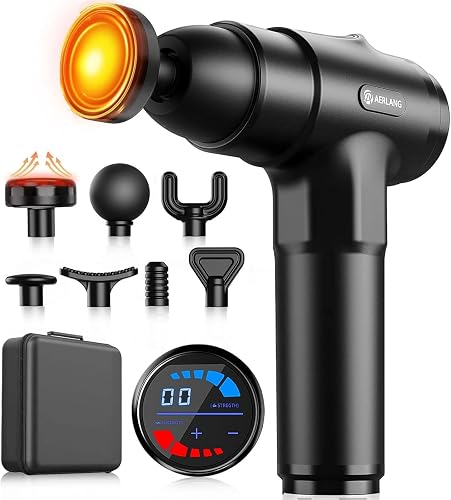
AERLANG Massage Gun with Heat, Deep Tissue Back & Neck Massager
The AERLANG is the best pure-heat option in this lineup. The heated head warms quickly and stays on a constant low-medium setting, which is what you want for relaxing the lumbar paraspinals and glute max before any percussion. It is heavier than the Mini 2 at roughly 2.1 pounds, so most pregnant users hold it with both hands or brace the elbow against a pregnancy wedge. The lowest speed is approximately 1600 PPM, which is actually gentler than the Theragun Mini 2's floor—useful if your pelvic-floor PT has asked you to stay below 1800 PPM. Skip the deepest two settings during pregnancy. AERLANG Massage Gun with Heat Deep Tissue Back Massager Neck Massager.
NAPRE Massage Gun with Heat and Cold, Deep Tissue
The NAPRE is the budget pick. It is the cheapest dual-temperature device that we'd consider prenatal-appropriate, with a heated attachment reaching about 122°F and a cold attachment around 50°F. Build quality is a step below the RENPHO, but the temperature control is reliable, and the lowest percussion speed is comparable. For someone who wants to try heat-plus-percussion during the third trimester without committing $200, this is the entry point. Use the soft ball head only—skip the bullet and fork attachments during pregnancy, as both apply too much localized pressure. Massage Gun with Heat and Cold.
TOLOCO Massage Gun (Postpartum, Not Pregnancy)
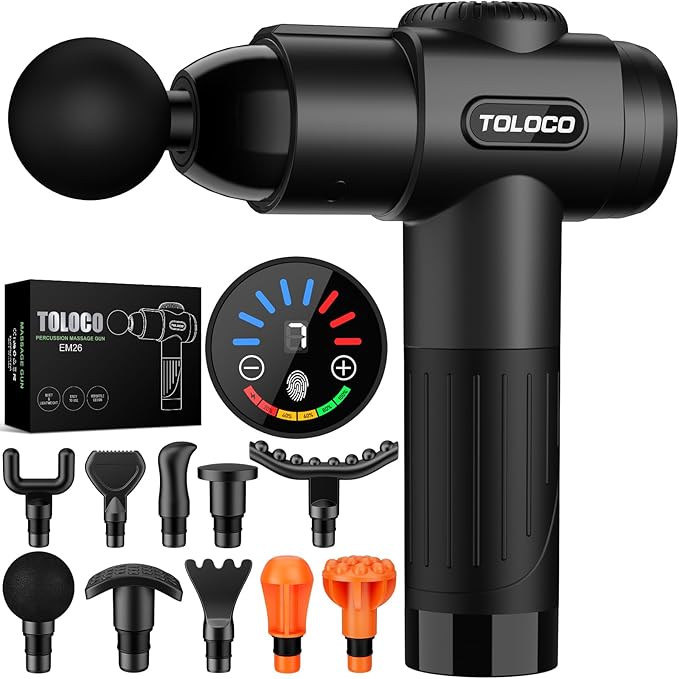
Including the TOLOCO here only because it is one of the most-purchased massage guns on Amazon and pregnant users frequently ask whether it's appropriate. The honest answer is no—not during pregnancy. Its lowest speed and stall force are tuned for athletic recovery, and its broad heads make it hard to keep pressure off the abdomen and pubic symphysis. Save it for postpartum, where it shines for upper-back and shoulder tension from feeding positions. TOLOCO Massage Gun.
How to Use a Massage Gun Safely With Pelvic Girdle Pain
Regardless of which device you choose, the safety protocol matters more than the brand. After clearance from your OB or pelvic-floor physiotherapist:
- Target only: glute medius, glute max, piriformis, outer hip, upper hamstrings, quadratus lumborum (the side of the low back, not the spine), and upper trapezius.
- Avoid entirely: the abdomen, the pubic symphysis, directly over the SI joint, the inner thigh adductor insertions near the groin, the calves (DVT risk in pregnancy), and the midline of the spine.
- Use the lowest speed and the softest attachment (ball or dampener). Float the device—do not press in.
- Limit to 15–30 seconds per spot, 2 minutes per muscle group, once or twice per day.
- Side-lying is the safest position—use a pregnancy pillow between your knees and avoid lying flat on your back after the second trimester.
- Stop immediately if you feel sharp pain, contractions, dizziness, or any reduction in fetal movement.
For more on safe self-care positioning, see our guide to prenatal massage gun safety and our overview of the best massage guns for glute medius work.
When to Skip the Massage Gun Entirely
Percussion therapy is not appropriate for every pregnant body. Skip it if you have any of the following: a high-risk pregnancy, preeclampsia, placenta previa, gestational hypertension, blood clotting disorders, varicose veins in the area you'd treat, recent bleeding, or any pelvic pain that is sharp, sudden, or accompanied by other symptoms. PGP that is severe enough to require crutches or a sacroiliac belt should be managed by a pelvic-floor PT, not by a consumer device. The Mini 2 is a complement to that care, never a replacement for it.
Postpartum: The Mini 2's Second Life
Pelvic girdle pain often resolves within weeks of delivery, but the muscular compensations don't. The Mini 2 (or any of the alternatives above) becomes genuinely valuable in the fourth trimester for the upper-back and neck tension of feeding positions, the persistent glute tightness from a changed gait, and—once cleared by your provider at the six-week checkup—gentle work on the lower back and outer hips. See our guide to pelvic floor recovery tools for a full postpartum protocol.
Frequently Asked Questions
Is the Theragun Mini 2 safe to use during the third trimester for pelvic girdle pain?
With your OB or pelvic-floor PT's clearance, yes—on approved areas only (glutes, outer hips, upper traps), at the lowest speed, with the soft ball or dampener attachment, in a side-lying position. Avoid the abdomen, the midline of the lower back, and directly over the pubic symphysis or SI joint. Many providers approve the Mini 2 specifically because its low speed of 1750 PPM and 10 mm amplitude are gentler than full-size guns.
Can a massage gun trigger labor or contractions?
There is no strong evidence that gentle percussion on approved muscle groups triggers labor. However, deep work near acupressure points on the inner ankle (SP6), the webbing of the hand (LI4), and the lower back/sacrum has been historically associated with labor induction in traditional medicine, so avoid those areas. Stop immediately if you feel any contractions, and contact your provider.
What's the difference between the Theragun Mini 2 and the original Mini for prenatal use?
The Mini 2 (2024 refresh) added a quieter QX35 motor, USB-C charging, a slightly longer battery life of about 150 minutes, and improved grip ergonomics. Amplitude (10 mm) and speed range are similar to the original. For pregnancy, the meaningful upgrade is the reduced noise—it makes daily use during a nap window practical.
Should I use heat or cold for pelvic girdle pain in pregnancy?
Most pelvic-floor PTs recommend gentle warmth on the surrounding muscles (glutes, QL, hip flexors) to reduce guarding, and cold over the SI joint area if there is local inflammation after activity. A dual-temperature device like the RENPHO Active Thermacool 2 lets you do both with one tool. Avoid prolonged heat over the lower abdomen.
Can I use the Theragun Mini 2 directly on my SI joint?
No. Avoid placing any percussion device directly over the sacroiliac joint, the pubic symphysis, or the lumbar spine during pregnancy. The relaxin-induced ligamentous laxity means percussion over the joint itself can aggravate rather than relieve pain. Work the muscles around the joint—glute medius, piriformis, QL—not the joint itself.
Is the Theragun Mini 2 worth $199 over a $50 alternative for prenatal use?
If you'll use it daily through pregnancy and postpartum, the Mini 2's quieter motor, better ergonomics, and reliable low-speed control justify the price. If you mainly want heat plus percussion for occasional flare-ups, the RENPHO Active Thermacool 2 or NAPRE deliver more therapeutic value per dollar because temperature therapy is often the more useful modality for PGP than percussion alone.
How long does pelvic girdle pain last after pregnancy?
For most women, PGP resolves within 1–6 months postpartum as relaxin levels drop and the pelvic ring restabilizes. A small percentage experience persistent symptoms beyond six months and should be evaluated by a pelvic-floor physiotherapist. Continuing gentle percussion on the surrounding musculature postpartum—once cleared at your six-week checkup—can support the muscular re-coordination that lasting recovery requires.
Key Takeaways
- Choosing the right theragun mini 2 for pregnant women with pelvic girdle pain means matching the key features to your specific needs and budget
- Read real customer reviews and check the return policy before you commit
- Also covers: theragun mini pregnancy safe
- Also covers: pelvic girdle pain percussion
- Also covers: pregnancy massage gun lower back
- Compare value across models — the priciest option is not always the best fit