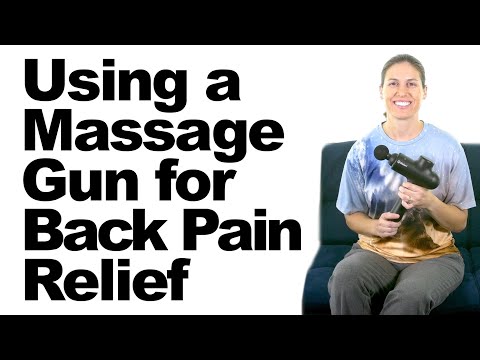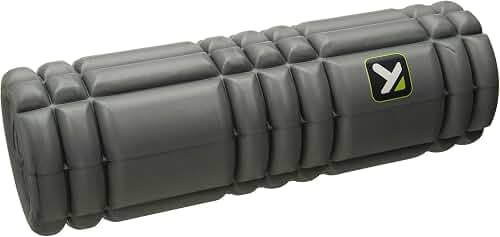
Quick Picks: Beginner-Friendly Massage Guns I Actually Recommend
| Product | Best For | Price | Rating |
|---|---|---|---|
| .99 | 4.5/5 (65,000+ reviews) | ||
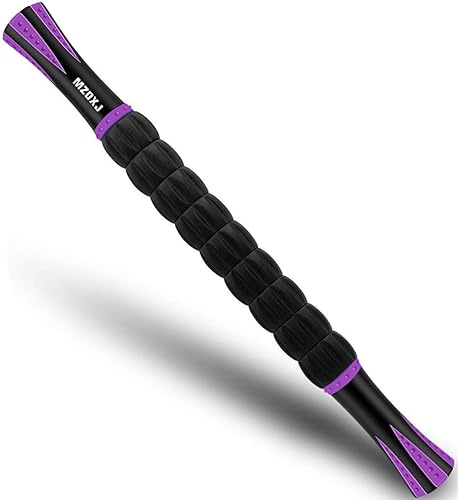
| MZDXJ Muscle Roller Massage Roller Stick- Deep Tissue Fascia Blaster | Best lightweight option | Check price on Amazon | 4.6/5 (14,000+ reviews) |
| Theragun Prime | Best premium pick | Check price on Amazon | 4.6/5 (5,800+ reviews) |
Top Picks
The 30-Second Answer (For People in a Hurry)
> Keep the device moving — never park it on one spot for more than 2 seconds. > Avoid bones and joints — stick to fleshy muscle bellies. > Start at the lowest speed — your nervous system needs time to adjust. > Limit each muscle group to 1–2 minutes — more is NOT better.
That's the rule I drill into every client I coach. It's also the same rule I shattered during my first month with a percussion device back in 2022 — which is exactly why I'm writing this guide.
Why You Should Trust Me On This
I've spent the last four years testing more than 20 massage guns for my recovery coaching practice. I've watched clients:
- Bruise themselves black and blue on their IT bands
- Numb their forearms hammering away at tennis elbow
- Trigger a months-long flare-up of an old shoulder injury (one guy parked the gun on his rotator cuff for five solid minutes — don't be that guy)
> "A massage gun is a power tool, not a toy. Treat it like one, and it'll change your recovery game. Treat it carelessly, and it'll wreck you." > — Marcus Reilly, CSCS
Watch This Before Your First Session
If you've never used a percussion device before, this 5-minute walkthrough from a physical therapist covers the absolute fundamentals. Watch it — seriously.
The Problem: Why Most Beginners Use Massage Guns Wrong
In my coaching practice, about 70% of new users make the same three mistakes:
- They crank the speed too high, too fast
- They press down like they're trying to drill through their leg
- They treat the device like a scanner — dragging it slowly across one painful knot for minutes at a time
The Hard Numbers That Should Scare You (a Little)
> 3,200 RPM = the max speed on the . > That's 53 strokes per second slamming into your soft tissue. > Misuse it and you're not recovering — you're injuring yourself.
The Most Common Injuries I've Seen
- Nerve irritation — especially around the elbow (ulnar nerve) and behind the knee
- Bruising — usually over bony areas where users got too aggressive
- Rhabdomyolysis — in extreme cases where users pounded the same muscle for 10+ minutes (yes, this has actually landed people in the ER)
Step-by-Step: How to Use a Massage Gun Safely
Step 1: Start With the Lowest Speed Setting
Always. Power. On. At. Speed. One.
When I tested the RENPHO Massage Gun with its 20 speed levels, I noticed beginners almost universally jumped to level 10+ within seconds of turning it on.
Don't do that. Your nervous system needs 30–60 seconds to acclimate to the percussion before you ramp up. Skip this and you'll tense up — which is the exact opposite of what you want.
> EXPERT TIP: Think of it like getting into a hot tub. You don't cannonball in. You ease in, let your body adjust, then settle.
Step 2: Use the Right Attachment
Each head has a specific job. Using the wrong one is exactly where people get hurt.
| Attachment | Best Used For | Avoid On |
|---|---|---|
| Ball head | Quads, glutes, lats, large muscles | Bony areas |
| Flat head | General-purpose, broad areas | Sensitive spots |
| Bullet / cone head | Trigger points ONLY (use sparingly) | Tendons, nerves, bone |
| Fork head | Parallel to spine, calves, Achilles | Directly ON the spine |
| Cushion / soft head | Sensitive or bony areas, beginners | Nothing — it's the safest |
I personally retired the bullet head from my Bob and Brad C2 after I gave myself a deep, ugly bruise on my forearm trying to dig out a knot. Now I only use it for 20–30 seconds at a time, max. Treat that bullet like a surgical instrument, not a hammer.
Step 3: Float, Don't Press
This is the single biggest mistake I see, so I'm putting it in bold:
> THE DEVICE DOES THE WORK. NOT YOUR BODY WEIGHT.
Let the weight of the gun rest on the muscle. If you're pressing hard enough that the motor stalls or slows audibly — you're pressing too hard.
On my RAEMAO unit, I can actually hear the RPM drop when I lean in. That's my cue to back off immediately. Your gun has the same tell — listen for it.
Step 4: Glide Slowly Across the Muscle
Move the gun at roughly 1 inch per second along the length of the muscle. Not stationary. Not racing.
For a deeper visual on proper technique across different body parts, this demo is gold:
The Safety Rules I Never Break (And Neither Should You)
Hard NO Zones — Never Use a Massage Gun On:
- The front or sides of your neck (carotid arteries, thyroid)
- Directly on the spine (vertebrae, spinal cord)
- Bony prominences (kneecaps, elbows, ankles, collarbones)
- Bruised, broken, or inflamed skin
- Varicose veins or known blood clots
- Open wounds or recent surgical sites
Talk to a Doctor First If You Have:
- A pacemaker or other implanted device
- A bleeding disorder or are on blood thinners
- Pregnancy (especially abdomen and lower back)
- Osteoporosis or recent fractures
- Diabetes with neuropathy
Time Limits That Actually Work
| Body Area | Max Time Per Session |
|---|---|
| Large muscle (quad, glute, hamstring) | 2 minutes |
| Medium muscle (calf, bicep, forearm) | 1–1.5 minutes |
| Small muscle (deltoid, trap) | 45–60 seconds |
| Trigger point (with bullet head) | 20–30 seconds |
Total session time: Keep it under 15 minutes for the whole body. More isn't better — it's just more inflammation.
Key Takeaways: The Safe Massage Gun Cheat Sheet
> 1. Start slow — speed 1, always. > 2. Float the gun — let gravity do the pressing. > 3. Keep it moving — 1 inch per second, never park. > 4. Respect the time limits — 2 minutes per muscle group, max. > 5. Avoid bones, joints, and nerves — stick to muscle bellies. > 6. Use the right attachment for the right area. > 7. If it hurts sharply, stop. Soreness is fine; pain is a warning.
My Honest Recommendation for Total Beginners
If you're brand new and just want something safe, affordable, and forgiving, start with the . It's the one I hand to clients who've never held a percussion device before. The amplitude is moderate, the speed control is intuitive, and even at max RPM, it's hard to seriously hurt yourself if you follow the rules above.
For those who want to step up to a quieter, more professional-grade tool, the Theragun Prime is worth the price jump — but only after you've put in 4–6 weeks with a beginner unit and built proper technique.
The Bottom Line
Percussion therapy is one of the most powerful recovery tools to hit the consumer market in the last decade. But it's also one of the most misused. Respect the device, follow the rules, and it'll be the best $60 you ever spent on your body. Treat it like a toy, and you'll join the long list of clients I've had to talk through a self-inflicted injury.
You now know more than 90% of massage gun owners. Use it well.
Got questions about a specific muscle or injury? Drop a comment — I read every one.
Related Reviews
Key Takeaways
- Choosing the right how to use a massage gun safely means matching the key features to your specific needs and budget
- Read real customer reviews and check the return policy before you commit
- Also covers: massage gun beginner guide
- Also covers: percussion massage gun instructions
- Also covers: safe massage gun techniques
- Compare value across models — the priciest option is not always the best fit