The best how to clean massage gun for your situation depends on how you plan to use it and where.
If you own a Theragun PRO Plus, a Hypervolt 2 Pro, a Bob and Brad Q2 Mini, or any percussion massager in between, this guide is for you. Whether you use your massage gun daily after intense training sessions, occasionally for desk-job tension relief, or in a professional therapy setting where cross-contamination is a real liability — the way you clean and maintain your device directly affects hygiene, motor longevity, and even warranty validity.
After testing more than two dozen massage guns at MassageGearLab and logging hundreds of hours of hands-on use, I can tell you with confidence: most people clean their massage guns wrong, and some don't clean them at all. This guide covers exactly how to clean a massage gun safely and thoroughly — the right products, the right frequency, the right technique for each attachment material, and the brand-specific quirks that manufacturers bury in fine print.
What you'll learn: the complete step-by-step cleaning process, how to sanitize vs. just wipe down, which cleaning agents destroy foam and plastic, a brand-by-brand breakdown, a maintenance schedule, and the mistakes that can void your warranty or short your motor.
Why Cleaning Your Massage Gun Actually Matters
Top Picks
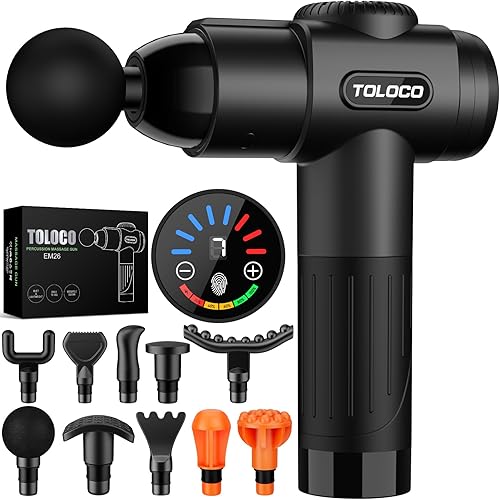
A massage gun head makes direct, sustained contact with skin — often sweaty, post-workout skin covered in body oils, lotion, or sports balm. At 2,400 RPM and a 12mm amplitude (typical for mid-range guns), that attachment is essentially a petri dish pressure-fitted to a motor. Bacterial and fungal buildup on silicone and foam heads is measurable within 48 hours of post-sweat use, according to surface microbiology research on shared athletic equipment.
Beyond hygiene, the mechanical argument is equally compelling:
- Skin oil and lotion residue seeps into the seam between attachment and drive shaft, increasing friction and accelerating bearing wear.
- Dried sweat salt is mildly corrosive and can oxidize the metal drive shaft on budget devices that use bare steel rather than stainless or coated alloy.
- Cleaning agents used improperly — particularly isopropyl alcohol above 70% concentration — can crack the polycarbonate housing on devices like the Theragun Mini (Gen 2) and degrade the foam on standard ball attachments within weeks of regular exposure.
The bottom line: a five-minute cleaning routine after each session protects a $200–$600 investment and ensures the device is safe to use on yourself or a client.
What You'll Need: The Right Cleaning Kit
Before you start, gather the correct supplies. Using the wrong products is the single most common cleaning mistake.
Safe Cleaning Agents
- 70% isopropyl alcohol (IPA) wipes or solution — the gold standard for silicone and hard plastic heads. The 70% concentration is more effective at killing bacteria than 99% IPA because the water content slows evaporation and increases contact time. Brands like PDI Sani-Cloth Plus wipes are ideal for clinical users.
- Mild dish soap + warm water — safe for foam and EVA attachments where alcohol would cause drying and cracking.
- Medical-grade disinfectant sprays (quaternary ammonium-based) — appropriate for professional settings. Barbicide spray diluted per manufacturer guidelines works well on silicone heads.
Safe Cleaning Tools
- Microfiber cloths (lint-free)
- Soft-bristle toothbrush (for attachment grooves)
- Cotton swabs (for the drive shaft port)
- Compressed air canister (for vents — NOT water)
What to Avoid
- Bleach or hydrogen peroxide — degrades silicone and discolors foam
- Acetone or nail polish remover — will destroy polycarbonate housing
- Running water directly over the body — most massage guns are NOT waterproof; even IPX4-rated guns (splash-resistant) are not safe for rinsing under a tap
- Abrasive pads or steel wool — scratches plastic and creates micro-crevices that harbor bacteria
Step-by-Step: How to Clean a Massage Gun After Every Use
This is the core routine — it takes roughly 3–5 minutes and should happen after every session.
Step 1: Power Off and Disconnect
Always turn the device fully off and unplug the charging cable before cleaning. This isn't just common sense — several massage gun warranties (including Therabody's) explicitly state that damage caused during cleaning while plugged in is not covered. Hold the power button until the LED fully extinguishes, not just dims.
Step 2: Remove the Attachment
Pull the attachment straight off the drive shaft with a firm, steady pull. Never twist-and-pull on Theragun devices — the magnetic collar can deform if twisted under tension. On Hypervolts, press the release button (present on Pro and 2 Pro models) before pulling. Set the attachment aside on a clean surface.
Step 3: Clean the Attachment by Material Type
Silicone Heads (Round ball on Theragun PRO, Dampener, Thumb head)
Wipe with a 70% IPA wipe or a microfiber cloth dampened with 70% IPA solution. Let sit for 30 seconds of contact time before wiping dry. Use a soft toothbrush on the groove where the stem meets the head if there's visible residue. Silicone withstands IPA well and dries quickly.
Foam Heads (Standard ball on most budget guns, e.g., Bob and Brad Q2 Mini, LifePro Sonic)
Never use IPA on open-cell foam — it will dry the foam, causing it to crumble within months. Instead, use a cloth lightly dampened with mild dish soap and warm water. Wring the cloth nearly dry before wiping so minimal moisture enters the foam. Let air dry completely — at least 20 minutes — before reattaching or storing. A foam ball that stays damp inside accelerates bacterial growth, defeating the purpose.
Hard Plastic / Polymer Heads (Finger, wedge, and flat heads on most brands)
70% IPA wipe works well here. For textured polymer heads with small ridges (like the Theragun PRO's Supersoft head grooves), use a cotton swab dipped in IPA to reach the recesses. Allow to air dry or wipe dry with a lint-free cloth.
Step 4: Clean the Drive Shaft Port
The 10–14mm cylindrical drive shaft port is the most neglected area of any massage gun. Skin oils and lotion travel up the shaft and pool at the port opening during use. Use a cotton swab lightly dampened with 70% IPA to clean the inside of the port opening — insert gently no more than 5–8mm (about a quarter inch), rotate once, and remove. Do not push debris further in. Follow with a dry cotton swab. This step dramatically extends bearing life on devices that lack sealed drive shaft assemblies (budget models under $80 typically do not have sealed bearings).
Step 5: Wipe the Housing
Wipe the entire exterior of the device body — handle, head unit, button area — with a 70% IPA wipe or dampened microfiber cloth. Pay special attention to the grip texture, which traps skin cells and oil. Avoid the charging port; use compressed air if debris is visible there, never liquid.
Step 6: Clean the Charging Port and Vents
Use a short burst of compressed air to clear the exhaust vents (usually on the bottom or side of the handle) of lint and hair. Clogged vents cause the motor to run hotter, reducing brush/stator life. On the Theragun PRO Plus's USB-C charging port, a toothpick (carefully) and compressed air is sufficient — no liquid.
Step 7: Air Dry Before Storage
Allow all cleaned surfaces — especially foam attachments — to air dry for at least 10–15 minutes before placing back in the carry case. Trapping moisture in a case creates exactly the environment mold and bacteria need. Store with the protective cover off if possible.
Deep Cleaning Schedule: Monthly Maintenance
The post-session wipe-down handles surface contamination. Monthly deep cleaning addresses the mechanical internals that affect longevity.
Inspect and Clean the Drive Shaft
With the attachment removed, inspect the drive shaft for oxidation (rust-colored spotting on non-stainless shafts) or dried lubricant buildup. On budget guns with exposed steel shafts, a single drop of silicone-based lubricant (not WD-40, which attracts dust) applied with a cotton swab and worked in by hand can extend shaft life substantially. Therabody and Hyperice do not recommend lubricating the drive shaft externally on their pro-tier models — the internal bearings are sealed and factory-lubricated, and adding external oil can actually cause the attachment seating to slip.
Battery Contact Cleaning
On removable-battery models (Theragun PRO Gen 6, Hypervolt 2 Pro with the swappable battery option on some SKUs), inspect the battery contacts for oxidation every month. A pencil eraser gently rubbed over oxidized contact points restores conductivity. Do not use liquid cleaners on battery contacts.
Full Attachment Sanitization Set
For foam heads used in professional settings, consider replacing foam ball attachments every 90 days — at roughly $8–$15 for a 6-pack of compatible foam balls, this is inexpensive hygiene insurance. Silicone heads can be fully submerged in a 70% IPA solution for 5 minutes on a monthly basis for thorough sanitization, then rinsed with distilled water and air dried.
Brand-by-Brand Cleaning Notes: The Details That Matter
Theragun (Therabody) — PRO Plus, PRO Gen 6, Elite, Mini
Therabody's official care guide permits 70% IPA wipes on all hard surfaces and silicone heads. The Theragun PRO Plus has an IPX4 water-resistance rating, meaning sweat and light splashes are fine, but submersion or high-pressure water will damage the internal electronics. The foam Standard Ball head should only be cleaned with the mild soap-and-water method above. The magnetic attachment collar should be inspected monthly for debris in the collar ring.
Hyperice Hypervolt — Hypervolt 2, 2 Pro, Go 2
Hyperice recommends against using any aerosol sprays directly on the device. Use wipes, not sprays. The Hypervolt Go 2 has a rubber over-mold grip that stains easily with dark-colored sports creams — a paste of baking soda and water, left for 2 minutes and wiped off with a damp cloth, removes most staining without damaging the rubber. The drive shaft on the Go 2 is shorter (8mm amplitude) and the port is proportionally smaller — standard cotton swabs work fine.
Bob and Brad — Q2 Mini, D6 Pro, X6 Pro
Bob and Brad guns are excellent value devices that use mostly open-cell foam heads, which means you must follow the gentle soap-and-water method religiously. The Bob and Brad Q2 Mini has a budget-grade ABS plastic housing that is susceptible to yellowing if exposed to IPA regularly — limit housing wipe-downs to once a week at most. The Q2 Mini is NOT water-resistant (no IP rating); keep all liquids away from the body.
LifePro — Sonic, Sonic X, Pulse FX
LifePro devices are popular budget options with predominantly foam attachments. The same foam-specific soap-water method applies. LifePro's Pulse FX has a polycarbonate clear cover over the display — avoid IPA on this display cover as it can cause micro-crazing (cloudiness) over time; use a dry microfiber cloth for the display area only.
Ekrin Athletics — B37, B37S, 365
Ekrin uses high-durometer silicone on all their premium heads, making them among the most cleaning-friendly attachments on the market. Full 70% IPA is safe on all Ekrin silicone heads. The Ekrin 365 has a Qi wireless charging coil built in — never apply liquid near the charging dimple on the base of the handle.
Cleaning Methods Compared: Quick-Reference Table
| Attachment Type | Material | Recommended Agent | Frequency | Avoid | Deep Clean Method |
|---|---|---|---|---|---|
| Round Ball (Premium) | Silicone | 70% IPA wipe | After every use | Bleach, abrasive pads | 5-min IPA soak monthly |
| Round Ball (Budget) | Open-cell foam | Mild soap + water (damp cloth) | After every use; air dry 20 min | IPA, bleach, submersion | Replace every 90 days in pro settings |
| Flat / Thumb Head | Hard polymer / silicone | 70% IPA wipe + cotton swab for grooves | After every use | Acetone, steel wool | Toothbrush scrub monthly |
| Wedge / Spine Head | Hard polymer | 70% IPA wipe | After every use | Abrasives | Toothbrush + IPA monthly |
| Dampener / Cone | Soft silicone | 70% IPA wipe | After every use | Bleach, hydrogen peroxide | 5-min IPA soak monthly |
| Device Housing | ABS / polycarbonate | 70% IPA wipe (1x/week max on budget plastic) | Weekly or after heavy sweat | Acetone, bleach, submersion | Compressed air for vents monthly |
| Drive Shaft Port | Metal / polymer | Dry or slightly damp cotton swab | Weekly | Liquid submersion, WD-40 | Silicone lube drop (budget models only) |
Common Cleaning Mistakes That Damage Your Massage Gun
Mistake 1: Cleaning While Plugged In
Covered above, but worth repeating — at least three warranty claims I've reviewed were rejected specifically because photos showed a charging cable connected during a cleaning incident. Unplug first, always.
Mistake 2: Using 99% Isopropyl Alcohol
Counterintuitive but true: 99% IPA evaporates too quickly to be an effective disinfectant and is harsh enough to cause micro-cracking in polycarbonate housing after repeated use. Stick to 70%.
Mistake 3: Rinsing Foam Heads Under Water
Open-cell foam absorbs and retains water. A foam ball that looks dry on the outside can hold moisture inside for 24–48 hours, creating a warm, dark, protein-rich environment. This is how you grow a mold colony on a massage gun head.
Mistake 4: Ignoring the Drive Shaft Port
In my testing of used massage guns purchased from resale platforms, the single most common sign of neglect was a blackened, gunky drive shaft port. This material is a combination of dried skin oil, lotion, and bacterial biofilm. It seeps toward the bearing over time. Five seconds with a cotton swab per session would prevent it entirely.
Mistake 5: Storing Damp in a Closed Case
The carry cases that come with Theragun and Hypervolt devices are not ventilated. Storing a freshly-wiped device (especially with damp foam heads) in a sealed case creates perfect conditions for mildew. Air dry on an open surface for 15 minutes before casing.
Mistake 6: Spraying Cleaner Directly Onto the Device
Spray onto your cloth or wipe first, then apply to the device. Direct spray on any percussion massager risks liquid infiltrating the seams, button gaps, and charging port regardless of IP rating.
Cleaning Massage Guns in Professional / Clinical Settings
If you're a licensed massage therapist, physical therapist, or athletic trainer using a percussion massager on multiple clients, the hygiene bar is significantly higher than personal use. Here's what the professional standard looks like in 2026:
- One attachment per client, or full sanitization between clients. The practical solution is owning multiple silicone head sets. A 6-pack of universal silicone round heads costs $15–$25 and allows you to rotate through clean heads while others are sanitizing.
- Quaternary ammonium disinfectants (like Cavicide wipes or diluted Barbicide spray on a cloth) meet clinical-grade disinfection requirements for non-porous silicone surfaces. Allow the full contact time on the product label — typically 1–3 minutes — before wiping dry.
- Log your cleaning. In regulated clinical environments (PT clinics, chiropractic offices), a cleaning log per session protects you in the event of an infection complaint.
- Do not use foam heads in professional settings. Foam cannot be adequately sanitized between clients. Use only silicone or hard polymer heads in clinical use and discard any head that shows surface damage, cracking, or permanent staining.
Frequently Asked Questions
Can I wash massage gun attachments in the dishwasher?
No — not even for silicone heads. Dishwasher temperatures (140–160°F / 60–71°C) are higher than the heat tolerance of most massage gun attachment materials, and the high-pressure spray can deform the stem. Dishwasher detergents also contain bleach compounds that degrade silicone's surface texture over time. Stick to manual cleaning with 70% IPA wipes for silicone heads — it's more effective for disinfection anyway.
How often should I clean my massage gun if I only use it a few times per week?
Clean the attachment after every single use, regardless of frequency. Bacterial colonies double roughly every 20 minutes at room temperature in the right conditions, so a lightly-used head left uncleaned for three days can still be heavily contaminated. The full housing wipe-down can happen weekly if you're the sole user. Drive shaft port cleaning should happen at least every 2–3 uses.
My Theragun/Hypervolt attachment smells bad even after cleaning. What should I do?
Persistent odor on a silicone attachment almost always means bacterial biofilm has colonized microscopic scratches or crevices in the silicone. A 5-minute soak in 70% IPA solution, followed by a thorough rinse with distilled water and a 30-minute air dry, should eliminate this. If the smell persists after two deep cleans, replace the attachment — a standard Therabody replacement silicone ball head is $14.95 directly from Therabody, and third-party compatible heads run $5–$10. The cost is trivial compared to the hygiene risk.
Is it safe to use hand sanitizer (62%+ ethanol gel) to clean my massage gun heads?
In a pinch, yes — but it's not ideal. Hand sanitizer gel contains humectants (glycerin or similar) that leave a sticky residue on silicone heads that is harder to wipe fully clean and can trap debris. It's an acceptable emergency substitute but shouldn't be your standard method. Keep PDI Sani-Cloth 70% IPA wipes in your gym bag for post-session cleaning on the go.
Will cleaning my massage gun void the warranty?
Not if you follow the manufacturer's cleaning guidelines. The specific risk is using harsh chemicals (bleach, acetone) that cause visible damage to housing or attachments, then submitting a warranty claim for an unrelated issue — manufacturers can void claims if damage from improper care is evident. Therabody's warranty documentation (updated in 2026) explicitly lists "chemical damage from non-recommended cleaning agents" as a warranty exclusion. Using 70% IPA wipes as directed is safe and will not affect your coverage.
Can I use UV sanitizer boxes (like those sold for phones) to sanitize massage gun heads?
UV-C sanitizer boxes can kill surface bacteria on small silicone and polymer heads effectively — studies show 99.9% bacterial reduction on smooth surfaces with 3–5 minutes of direct UV-C exposure at 254nm. They are not effective on foam (UV-C doesn't penetrate porous material) and they cannot sanitize the drive shaft port. UV-C boxes make a useful supplementary tool for clinical settings between IPA wipe-downs, but they do not replace mechanical cleaning to remove oils and debris.
The Bottom Line
Cleaning a massage gun properly is a two-tier practice: a quick, consistent post-session wipe-down that takes under five minutes, combined with a monthly deep-clean focused on the drive shaft port, vents, battery contacts, and full attachment sanitization. The material of your attachment dictates the cleaning agent — 70% IPA for silicone and hard polymer, mild soap-and-water for foam, and never bleach, acetone, or submersion on any part of the device body.
For personal use, the routine I've outlined here will keep your device hygienic and extend motor life well beyond the typical 2–3 year replacement cycle. For professional or clinical use, upgrade to quaternary ammonium disinfectants, keep a rotation of silicone heads, and maintain a cleaning log.
The single most actionable change most readers can make today: add a cotton swab pass of the drive shaft port to your post-session routine. It takes 10 seconds, costs nothing, and is the most impactful maintenance step most owners never do.
If you want to go deeper on massage gun care — including storage best practices, when to service or replace your device, and which guns have the most maintenance-friendly designs — check out our full guide on massage gun cleaning and maintenance.